TMJ Treatment Ann Arbor
Solutions for a Sore, Stiff Jaw
Have you been experiencing constant pain in your jaw recently? Are you having trouble opening or closing your mouth? These symptoms could mean that you have a TMJ disorder, which is a condition that can take a significant toll on your quality of life if it goes untreated. The good news is that Dina H. Cocco, DDS, can diagnose and treat the problem to help you get the lasting relief that you deserve. Give our office a call today if you think you might be in need of TMJ treatment in Ann Arbor.
What is TMJ Disorder?

TMJ is short for temporomandibular joint, which is the name of the joints that allow your jaw to make the necessary motions for biting, chewing, and speaking. Sometimes the TMJs are damaged or exposed to too much strain, resulting in a painful TMJ disorder. The underlying cause of this condition isn’t always clear, but there are several common risk factors such as bruxism (unconscious grinding or clenching of the teeth), unmanaged stress, a sudden blow to the face, or bite problems.
Symptoms of TMJ Disorder

When you have TMJ disorder, you are likely to experience pain in your jaw joints and the muscles around them. On top of that, your jaw may occasionally become locked in an open or closed position. Other common symptoms include:
- A ringing sound in the ears.
- Headaches and migraines.
- Pain in the neck or back.
- Having trouble chewing your food.
- Changes in your bite.
You don’t want to leave TMJ disorder alone for too long, so if you notice any of the symptoms listed above, it’s a good idea to reach out to our office right away and schedule an appointment.
Types of TMJ Treatment

The process of treating TMJ disorder begins with a thorough examination of your mouth and jaw; this will likely include taking X-rays of your jaw joints. Once a diagnosis has been made, we can review your options for addressing the problem and work with you to create a treatment plan. Below is a quick look at how we can help you find relief from your TMJ-related pain.
Occlusal Splint
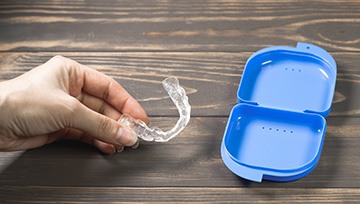
An occlusal splint is a simple oral appliance that is intended to be worn while you’re asleep. It prevents the upper and lower rows of teeth from making direct contact with each other, thus providing protection against the grinding and clenching that is known to make TMJ disorder worse. On top of that, an occlusal splint can reposition your jaw to help it find a better resting position. This small change can take some of the pressure off your TMJs and give them a chance to heal.
TMJ Treatment FAQs
Will TMJ Disorder Go Away On Its Own?
Although many of the symptoms can dissipate over time, the underlying cause of the disorder can still be a problem. If it is not addressed, there is a good chance that symptoms will return, and the issue may worsen. Instead of the pain being focused solely on your jaw joints, it may manifest in other ways, including neck and back pain, frequent headaches, and increased difficulty opening and closing your mouth.
Professional treatment is the only way to ensure longer-lasting relief.
What Can I Do At Home to Relieve TMJ Pain?
Seeing a professional dental expert is always the best option when it comes to relieving TMJ pain. However, whether you’re waiting for your appointment or want to do more to alleviate discomfort, you can:
- Avoid hard, chewy, or sticky foods, as these place additional pressure on your jaw joints when biting down and chewing.
- Use hot and cold compresses to reduce inflammation and discomfort.
- Try to maintain proper posture.
- Find ways to reduce your stress with exercise, meditation, counseling, reading a book, etc.
How Long Does It Take for a TMJ Splint to Work?
Dr. Cocco may recommend that you wear your occlusal splint to bed every night to ensure the most effective results. Soon after you begin his new process, you will start to notice your symptoms diminish. While they will not all disappear at the same time, you will begin to notice an improvement.
Encouraging your TMJs to move into a healthier, more comfortable position takes time, so you should not expect an overnight “fix.” Instead, it is normal for most patients to experience marked improvement within six weeks. It can take 2-3 months, however, for an occlusal splint to resolve TMJ pain.
Is TMJ Treatment Expensive?
The cost associated with TMJ Treatment in Ann Arbor varies. The reason is likely because of the geographic area of your dentist’s office, the severity of your condition, and the type of treatment you receive.
During your consultation with Dr. Cocco, she will discuss the various components of your cost estimate so that you better understand your situation.
TMJ Treatment may be partially covered by your medical or dental insurance, but if it is not, you can apply for CareCredit. This allows you to enroll in a 12-month, no-interest payment plan. With a low monthly payment and no annual fee, you can remain within your budget while taking care of your oral health.